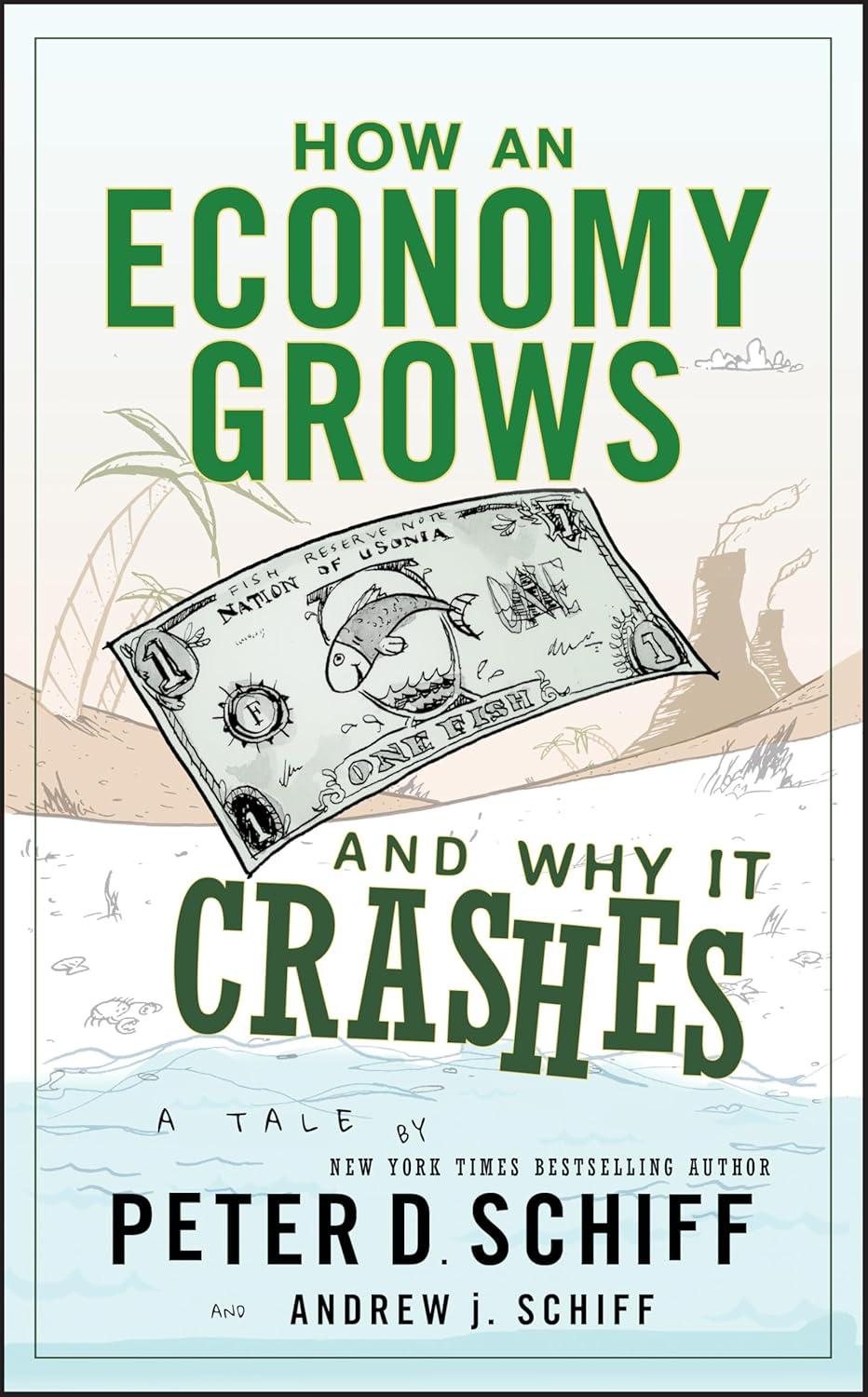
When we first picked up How an Economy Grows and Why It Crashes, we weren’t expecting a lesson that would blend humor with crystal-clear economic explanations. What we found was a surprisingly engaging and accessible guide that made complex ideas feel approachable-even fun. Authored by Peter Schiff and his brother Andrew, this book channels a lively spirit inspired by their father’s classic, How an Economy Grows and Why It Doesn’t, while tackling the thorny issues of today’s economic landscape.
From the importance of trade and saving to the destructive nature of consumer credit and inflation’s roots, the book uses simple illustrations and witty storytelling to demystify what often feels like an overwhelming subject. As we delved into its pages, we appreciated how it manages to entertain without sacrificing depth-making it a perfect read for both beginners eager to grasp the basics and seasoned readers looking for fresh insights. In this review,we’ll explore how How an Economy Grows and Why It Crashes not only educates but also encourages us to think critically about the economy that shapes all of our lives.
Table of Contents
Understanding the Core Narrative of Our Economy

When we dive into the core narrative of our economy, it’s pretty clear that understanding basic principles is crucial. The


One of the most eye-opening aspects is how this book exposes common misconceptions, especially around consumer credit and inflation. It uses humor and clever illustrations to clarify why reckless borrowing can lead to economic crashes, and how saving and risk management are keys to lasting growth. It’s like having a chat with a knowledgeable friend who keeps it real but also makes you see the bigger system behind everyday decisions. For anyone curious about how things really work behind the scenes of our economy, this book is a game-changer, distilling layers of economic complexity into stories that stick.
this book offers a solid foundation for , making it easier for us to see where pitfalls lie and how policy choices affect everyone. It encourages critical thinking about growth and crisis, highlighting how building real, productive assets drives stability. Whether you’re interested in economics for personal finance or looking to deepen your understanding of national issues, this resource is invaluable for getting the full picture of how money, riskand growth interact. If we want to truly grasp what makes an economy tick, this is a must-read.
Check the current pricing below:
Ready to understand the core narrative of our economy? Check Latest Price
Exploring the Key Concepts That Shape Our Wealth and Failures
Understanding the core ideas behind economic growth and downturns is essential if we want to grasp how wealth is built and how failures occur. The book “How an Economy Grows and why It Crashes” offers a refreshingly engaging look into these concepts, making complex ideas understandable through humor and simple storytelling. It’s like sitting down with friends who explain why things happen the way thay do in the economy,rather of a dry,dense textbook.If we want to decode the secrets behind prosperity and collapse,this book is a perfect starting point.
The authors dive into essential economic concepts such as the creation and use of capital, trade, savingsand risk-using vibrant illustrations and witty commentary. For example, they illustrate how wealth grows when people save and investand how consumer credit, if misused, can lead to economic busts. We find that these ideas aren’t just abstract theories but practical lessons that shape real-world financial health. Whether we’re beginners or more seasoned, these lessons help us understand how policies, habitsand financial decisions ripple through the entire economy, influencing whether it blossoms or crashes.
One of the highlights is how the book explains the importance of trade and the dangers of consumer debt in a straightforward way. It clarifies how increasing productivity and investment drive growth, but irresponsible borrowing and money printing can easily trigger inflation and collapse. The real-world insights we gain make it easier to see the bigger picture in national economic situations, personal financesand global trade dynamics. It’s not just a book for economists but for anyone curious about the forces that shape our fiscal realities.
“How an Economy Grows and Why it Crashes” demystifies the key concepts that shape our wealth and failures with accessible language and clear visuals. It challenges common misconceptions and encourages us to think critically about economic policies, individual habitsand government actions. For those wanting a solid foundation in how economies thrive or falter-without the boring jargon-this book is a must-read. Ready to deepen your understanding? Check Latest Price
Diving Deep Into the Illustrative Examples and Analogies
of “How an Economy Grows and why It Crashes”
When we explore the book “How an Economy Grows and Why It Crashes,” the vividness of its illustrations and relatable analogies truly stand out.The authors, Peter and Andrew Schiff, do an excellent job of turning complex economic principles into stories that feel almost conversational. These examples are not just simple; they’re crafted to make readers feel like they’re part of the economic journey, observing growth and setbacks firsthand.Rather of dry theories, we get engaging visuals that clarify topics like capital creation and consumer behavior, making the learning experience both fun and impactful. our understanding deepens as these stories illuminate the roots of economic stability and collapse, offering us a practical lens through wich to view real-world issues.
One of the most compelling features of the book is how it employs everyday scenarios and humor to explain intricate concepts. For instance, the analogy of building a house or running a lemonade stand helps us grasp foundational ideas like investment, riskand the importance of saving. These stories aren’t just entertaining-they serve as powerful tools for grasping how decisions in a simplified economy mirror larger national and global financial systems. The analogies often highlight the destructive nature of excessive borrowing or consumer credit by showing how a seemingly small mistake can lead to a big crash, much like overextending at a lemonade stand turns sour quickly. This approach isn’t just memorable; it deepens our comprehension of why economies grow and crash, making this book a valuable resource for both newbies and seasoned professionals alike.
the illustrative examples and analogies in this book truly elevate its educational value. by combining wit, humorand straightforward storytelling, it manages to demystify economic phenomena that usually feel intimidating. These stories stick with us because they simplify without condescension, turning abstract ideas into relatable moments. They help us understand the importance of wise money management, the risks of debtand the necessity of honest trade-all vital lessons for navigating today’s complex economic landscape. For anyone eager to see economics in action through engaging stories, this book’s illustrations and analogies offer a clear, approachable path to a deeper understanding of how economies grow-and why they sometimes fail.
Our Reflections on the Clarity and Effectiveness of the Presentation
when we first dove into the
the effectiveness of the presentation is boosted by its conversational tone, which makes the content feel like a friendly chat rather than a dry lecture. Humor is sprinkled throughout, making the learning experience enjoyable rather than intimidating. We appreciate how the authors use everyday examples and straightforward language, which helps bridge the gap between academic jargon and real-world understanding. Because of this, the book seems designed to ensure that key economic principles stick, turning complex theories into memorable stories. It’s clear that the intent was to communicate effectively,and we think they succeeded in doing so.
the presentation’s design maximizes clarity and delivers its message with precision. From the well-structured chapters to the illustrative graphics,everything works together to enhance our understanding. More importantly,it fosters critical thinking about how economies function and why they sometimes crash,making it both educational and thought-provoking. For anyone seeking a user-friendly yet comprehensive guide to basic economic principles, this book hits the mark. It’s a solid choice for readers who want to grasp how economies grow and occasionally stumble in an engaging, effective way.
Ready to experience the clear and effective presentation firsthand? Check Latest Price
Practical Takeaways and Recommendations for Engaging with the Material
If you’re diving into the fundamentals of economic growth and understanding why economies sometimes crash, this book offers a treasure trove of practical insights. To get the most out of it,we recommend starting by actively engaging with the illustrated stories and real-world examples. These are not just entertaining but serve as powerful tools to grasp complex concepts like capital creation, consumer creditand trade.Remember to pause and reflect on each chapter’s key takeaways, perhaps even jotting down notes or drawing speedy diagrams to solidify your understanding. This approach makes dense economic ideas more relatable and memorable, especially if you’re new to the subject.
Another tip is to revisit sections that cover topics you find challenging, such as inflation or risk management.Re-reading with a purpose-focusing on specific questions like “How does consumer credit lead to economic collapses?”-can deepen your comprehension. Pair the reading with supplementary resources like economic articles or podcasts to enhance context. Don’t shy away from discussing the material with fellow readers or online communities,as bouncing ideas around helps internalize key principles. Our proposal is to treat this book not just as a casual read but as a conversational tool that challenges assumptions and encourages critical thinking about how economies truly work. Engaging actively with the material will grant you a clearer, more nuanced perspective of economic dynamics in the real world.
If you’re considering whether this book is worth your investment, keep in mind the straightforward language, humorand illustrations that make complex ideas accessible. It’s not just about absorbing details but about applying it to current economic scenarios you encounter daily. Whether you’re a student, professionalor just a curious reader, use this book as a foundation to ask better questions about economic policies and market trends. We suggest taking notes, discussing with othersand revisiting key chapters periodically to reinforce your insights. This active engagement turns passive reading into a truly enriching learning experience that empowers you to see beyond headlines and understand the mechanics underneath.
Ready to dive in? Get it now on Amazon
Customer Reviews Analysis
Customer Reviews analysis
As we delved into the feedback from readers of “how an Economy Grows and Why it Crashes”,we found a tapestry of opinions that reflect the book’s impact across a diverse audience. The reviews highlight a mix of admiration for its clear explanations and criticism of its simplicity, offering us valuable insights into what makes this book resonate-or sometimes fall short-with its readers.
Key Themes from Customer Feedback
- Ease of Understanding: Many readers appreciate how the book breaks down complex economic concepts into relatable stories. This clarity makes the subject accessible to beginners, which we believe is one of its strongest assets.
- Engagement and Style: Several reviews commend the engaging storytelling approach, mentioning how it keeps them interested throughout. Others note that the informal style sometimes lacks the depth they seek in economic analysis.
- Practical Insights: A common point of praise revolves around the practical illustrations of how economies grow and crash, helping readers grasp the real-world relevance of economic principles.
- Criticism and Limitations: On the flip side, some reviewers feel that the book oversimplifies certain economic dynamics, leaving advanced readers desiring more nuanced discussions. A few mention that repetitive analogies can sometimes be tiresome.
Summary of customer Sentiments
| Aspect | Customer Sentiment |
|---|---|
| Clarity | Positive: Many find it remarkably straightforward |
| Engagement | Generally high; stories hold attention |
| Depth | Mixed; some seek more complexity |
| Relevance | Appreciated practical insights |
the customer reviews paint a picture of a book that excels in demystifying economics for the layperson, yet leaves room for more in-depth analysis for seasoned readers. As we interpret these insights,it’s clear that this work’s appeal largely depends on the reader’s prior knowledge and expectations.
Pros & Cons
Pros & Cons
Pros
- Accessible Explanation: Uses humor, illustrationsand storytelling to make complex economic concepts easier to grasp.
- Engaging and Entertaining: Combines wit and insight to keep readers engaged while learning about growth, riskand trade.
- Foundational Knowledge: Provides a solid understanding of how economies function, suitable for both beginners and experienced readers.
- Clear Critique of Common Fallacies: Challenges popular myths and misconceptions about economic growth and crashes.
- Compact and Well-Illustrated: With 256 pages and engaging visuals, it’s a quick yet comprehensive read.
Cons
- Simplification Risks: Some may feel it oversimplifies complex topics, missing certain nuances.
- partisan Perspective: The authors’ strong economic opinions might not resonate with all readers.
- Focus on Fundamental Concepts: Less detailed analysis on specific current economic policies or data.
- Humor and Style: The humorous approach may not appeal to those preferring formal academic writing.
| aspect | Summary |
|---|---|
| What it does well | Makes economics approachable & fun |
| Potential limitations | Simplifies complex issues & reflects authors’ views |
| Ideal for | Beginners, students, anyone wanting a clear economic overview |
Q&A
Q&A Section for “Best Economics book – How an Economy Grows and Why it Crashes” Review
Q1: What makes “How an Economy Grows and Why It Crashes” stand out from other economics books?
A1: We find that its unique blend of humor, vivid illustrationsand accessible storytelling sets it apart. Unlike dense textbooks, this book simplifies complex economic principles without losing their meaning, making it perfect for both beginners and seasoned readers. Its engaging approach helps us see how fundamental elements like savings, riskand trade fit together in the big economic picture.
Q2: Is this book suitable for someone with no prior knowledge of economics?
A2: Absolutely. The authors, Peter and Andrew Schiff, leverage storytelling and humor to break down topics that often seem intimidating. We appreciate how it welcomes newcomers into the world of economics while still providing insightful content that can interest more experienced readers.
Q3: Does the book address current economic issues?
A3: Yes, it incorporates contemporary economic challenges, building upon principles introduced in the original work inspired by their father’s “How an Economy Grows and Why It Doesn’t.” We see it as a timely guide that helps us understand the roots of inflation, the impacts of consumer creditand the importance of savings and trade in today’s economy.
Q4: How effective is the book’s use of humor and illustrations?
A4: We believe the humor and illustrations are one of its strongest aspects. They make learning enjoyable and memorable, transforming complex concepts into relatable stories. This engagement helps us retain key principles much better than traditional academic texts.
Q5: Would you recommend this book to professionals in economics?
A5: Certainly. While it’s designed to be accessible for beginners, its clarity and logical explanations also provide valuable insights for professionals. It encourages us to think critically about common economic fallacies and the real causes behind economic booms and crashes.
Q6: Are there any drawbacks to reading this book?
A6: As with any simplified explanation, some readers might desire more depth or technical detail.Though, we see its main strength as providing a foundational understanding that can be built upon with further study.
Q7: How does this book compare to more traditional economics texts?
A7: Unlike traditional textbooks that can be dry and abstract, this book combines education with entertainment.We find it to be a refreshing way to grasp the essentials of economics, making complex ideas approachable without sacrificing accuracy.
Q8: Would you say this book changed your perspective on the economy?
A8: Definitely. Its clear explanations and logical approach have helped us see the economic landscape in a new light, particularly understanding how growth factors and pitfalls like crashes are interconnected. It’s both enlightening and empowering as a reader.
If you have further questions or want more insights, feel free to ask!
Seize the Opportunity
As our journey through “How an Economy Grows and Why It Crashes” comes to a close, we’re reminded just how accessible and enlightening economic concepts can be when presented with clarity, humorand a touch of storytelling. This book successfully demystifies complex topics, making it an ideal read for both newcomers and seasoned enthusiasts seeking a fresh perspective. whether you’re aiming to understand the roots of economic booms and busts or simply want a smarter way to navigate everyday financial discussions, this book offers valuable insights in a captivating package.
Ultimately, our economic literacy benefits from engaging resources like this-ones that challenge assumptions, expose fallaciesand encourage critical thinking. If you’re ready to deepen your understanding of how economies grow-and why they sometimes stumble-this book is a worthwhile addition to your collection.
Don’t miss out-get your copy today and start building your economic know-how: Grab your copy of ”How an Economy Grows and Why It Crashes” now!